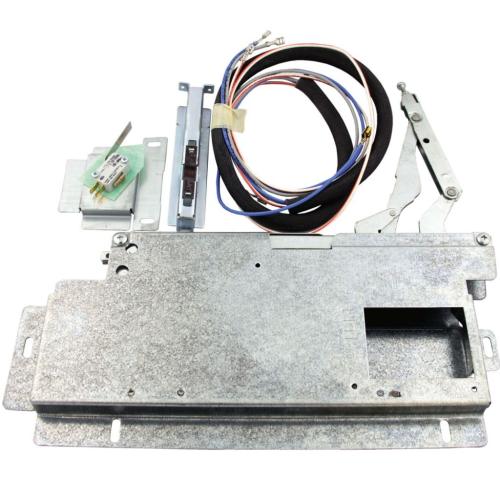
Oven hinge parts control how the oven door opens, closes, seals, and stays supported. If your oven door drops too fast, will not stay closed, hangs unevenly, or leaves a gap near the top, the hinge may be bent, worn, or no longer seated correctly.
A hinge problem can look like a door problem, a gasket problem, or even a heating problem because a door that does not seal properly lets heat escape. Replacing the correct left, right, or pair of oven hinges can restore safe door movement and help the oven hold temperature more consistently.
So, can you repair oven door hinges? In many cases, yes. Some hinges can be reseated if they slipped out of the hinge slot or the hinge lock was not engaged properly. If the spring has weakened, the arm is bent, or the hinge no longer holds tension, replacing the hinge is usually the better repair.
What Oven Hinges Do
An oven hinge is more than a simple metal pivot. It supports the weight of the door, controls the opening angle, allows the door to be removed on many models, and helps pull the door against the gasket when closed. A weak hinge can leave a small gap that causes heat loss, uneven baking, longer preheat time, or a hot exterior door area.
What are the parts of a hinge called? For oven repairs, you may see hinge arm, hinge receiver, hinge spring, hinge lock, hinge bracket, hinge screw, mounting plate, and door slot. If the surrounding door face is damaged, check the oven panel along with the hinge, because a bent panel or frame can stop a new hinge from sitting squarely.
|
Symptom
|
Possible Hinge Issue
|
What to Check Before Ordering
|
|
Door will not close all the way
|
Weak spring, bent hinge, hinge not seated
|
Check both left and right hinges and confirm the door is installed evenly.
|
|
Door drops suddenly
|
Broken hinge spring or worn hinge arm
|
Replace the hinge pair if both sides have uneven tension.
|
|
Door sits crooked
|
One hinge bent or wrong side installed
|
Confirm whether your model uses different left and right hinge part numbers.
|
|
Heat escapes near the top
|
Door not pulling against gasket
|
Inspect hinges first, then check the gasket and door liner.
|
How to Replace an Oven Hinge
So, how to replace an oven hinge? First, turn off power and let the oven cool completely. Open the door fully and look for hinge locks or tabs near the lower hinge area. Engage the locks if your model has them, then lift the door carefully at an angle. Place the door on a towel or padded surface before removing the inner panel screws.
Once the door is open on a protected surface, take a photo of the screw layout and hinge position. Remove the screws holding the hinge, swap in the replacement, and tighten the hardware evenly. Reassemble the door, set it back into the hinge slots, unlock the hinge tabs, and slowly open and close the door to confirm smooth movement.
If the door handle is loose while you are working on the hinge, inspect the oven handle and handle screws before reinstalling the door. A handle that flexes or pulls away can make users push or pull the door unevenly, which adds stress to the hinge over time.
Choosing the Correct Oven Hinge
Oven hinges are highly model specific. Some ovens use identical left and right hinges, while others use a left hinge and a right hinge with different part numbers. Some hinges include a spring. Others are sold as hinge assemblies or hinge kits. Always use the appliance model number and compare the hinge shape, arm length, spring position, and mounting holes.
What are the four types of hinges? In general hardware, you may hear terms like butt hinge, pivot hinge, concealed hinge, and spring hinge. For oven repairs, those broad names matter less than the exact oven hinge design. The practical details are whether the hinge is left or right, spring-loaded or friction-based, lock-tab or non-lock-tab, and whether it fits your door weight and mounting points.
|
Part Detail
|
Why It Matters
|
Customer Tip
|
|
Left or right position
|
Some models use side-specific hinges.
|
Check the diagram before ordering a single hinge.
|
|
Spring tension
|
Controls how firmly the door closes.
|
Replace both hinges if the door feels uneven.
|
|
Mounting holes
|
Determines whether the hinge bolts into the door properly.
|
Match the old hinge visually before installing.
|
|
Hinge lock style
|
Allows safe door removal and installation.
|
Do not force a locked hinge open by hand.
|
Related Parts to Inspect While the Door Is Off
When the oven door is removed, it is a good time to inspect trim, fasteners, liners, and wire paths. If screws are missing or the old hardware is rusted, a compatible oven kit may include the supporting pieces needed for a cleaner repair. If the door lock or light switch wiring runs near the hinge area, avoid pulling on any oven wire while separating the inner and outer panels.
The gasket should also be checked while hinge work is being done. A new hinge can pull the door into the correct position, but a flattened gasket may still leak heat. If the door closes evenly after the hinge repair but the oven still loses heat, the seal may need attention next.
Signs the Hinge Should Be Replaced Instead of Adjusted
A hinge can sometimes be reseated, but replacement is usually better when the arm is visibly bent, the spring is stretched, the door drops suddenly, the hinge will not hold its open position, or the door has to be lifted by hand to close. You should also replace a hinge that grinds, clicks loudly, or pulls away from the mounting point.
If hinge damage happened after a self-clean cycle or door lock issue, confirm the mechanical hinge problem first, then inspect the control area if needed. Electronic lock behavior may involve the oven circuit board, but a crooked or sagging door should be corrected mechanically before electrical parts are considered.
After replacing the hinge, test the door before heating the oven. The door should open smoothly, stop securely, close without lifting, and sit flat against the frame. A good hinge repair should feel controlled, not loose, stiff, or uneven.