GE dryer thermostats and sensors do different jobs even when their symptoms overlap. A cycling thermostat helps regulate operating temperature, a high-limit or safety thermostat responds to abnormal heat, a flame sensor supports gas-ignition control, and moisture sensor rods help an automatic cycle judge whether fabric is still damp. A dryer that will not heat, overheats, stops early, runs too long, or works only after cooling therefore needs a symptom-based inspection before any temperature-control part is ordered.
Begin with airflow and the heat source. Clean the lint screen, inspect the exhaust path for crushing or heavy lint, confirm the exterior hood opens, and note whether the drum turns normally. On an electric dryer, verify the complete supply because the motor may run when the heating circuit does not have the voltage it needs. On a gas dryer, observe the approved ignition sequence through the viewing area if the design provides one. A high-limit device that opens repeatedly may be protecting the dryer from restricted airflow, a grounded heater, a stalled blower, or heat trapped by incorrect venting.
The GE dryer thermostat WE04X25194 is one thermostat configuration in this collection. Its terminals, mounting position, calibration, and relationship to the heater or blower housing must match the original. A similar shape is not evidence that two thermostats have the same operating range.
Gas systems use a different sensing part. The GE dryer flame sensor WE4X448 monitors radiant heat in specified gas-burner assemblies and is not interchangeable with a temperature thermostat.
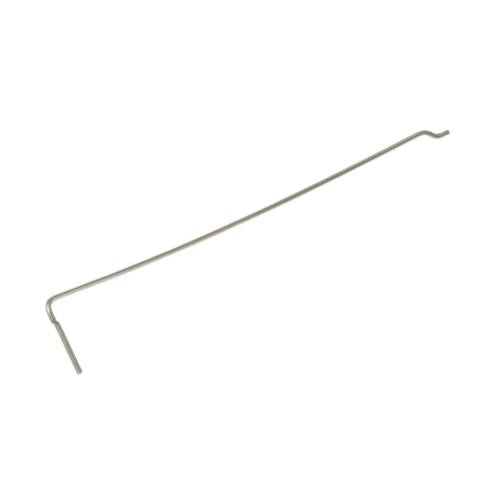
Automatic-dry systems can use the GE dryer sensor rod WE1M575 as part of the moisture-sensing path. A moisture sensor rod does not regulate heater temperature.
Quick inspection sequence
- Record whether the complaint is no heat, weak heat, overheating, heat that stops after several minutes, an automatic cycle that ends early, or a cycle that continues after clothes are dry.
- Disconnect power, let the dryer cool, and inspect the lint screen, blower inlet, internal duct, transition hose, wall duct, and exterior hood. Correct an airflow restriction before replacing a high-limit device.
- Check the heating element or gas ignition system, motor speed, blower condition, and supply. An open heater, failed igniter circuit, missing supply leg, or slipping blower can imitate thermostat trouble.
- Identify every temperature device by its exact mounting location and wire colors before removing connectors. Photograph terminal orientation and any insulating barrier.
- For an automatic-dry complaint, clean moisture sensor bars with a soft cloth and mild cleaner, then inspect the harness and grounding path. Fabric coating can insulate a sound sensor.
- Use the service procedure and a suitable meter to compare continuity or resistance at the stated temperature. Never bypass a thermostat, thermal safety, flame sensor, or door interlock for a live test.
Match the correct GE dryer thermostats and sensor part
- Match the complete printed part number, mounting flange, hole spacing, terminal size and direction, body depth, temperature markings, and installation position.
- Distinguish cycling, high-limit, safety, inlet, outlet, flame, ambient, and moisture-sensing functions. A part with the wrong calibration can create a hazardous operating condition.
- Check whether the replacement includes a bracket, insulator, terminal cover, or wiring lead. Transfer only pieces specifically shown in the instructions.
- Inspect the mating connector for heat damage or weak terminal tension. A new thermostat cannot correct a burned connector that creates resistance and localized heat.
Common problems and repair checks
Why does the GE dryer tumble but produce no heat?
Confirm the complete electrical supply or gas supply and ignition sequence before testing thermostats. On an electric dryer, the motor circuit can operate while a missing supply leg prevents heating. Then inspect the heater, thermal protections, wiring, and control output. The GE dryer thermostat WE04X25196 should be considered only when the circuit test and mounting position identify that specific thermostat as open or out of specification. Do not replace every round thermostat in the heat path. An upstream control, broken heater coil, igniter fault, or damaged connector can produce the same no-heat complaint.
Why does the GE dryer overheat or make clothes unusually hot?
Overheating most often requires an airflow check before a thermostat decision. Clear the lint screen and exhaust, confirm the blower moves air, inspect the heater for contact with its housing, and verify the cycling control changes state as specified. The GE dryer high-limit thermostat WE04X26139 is a protective device for listed assemblies; repeated high-limit operation indicates that abnormal heat may still be present. Replacing it without correcting a crushed vent, blocked duct, failed cycling thermostat, or grounded element can lead to another failure and unsafe temperatures.
Why does the GE dryer heat for a few minutes and then stop until it cools?
A heat source or motor that shuts down on temperature can produce this pattern. Check airflow, blower condition, drum load, motor cooling, heater current, gas-valve behavior, and connector heat before assuming a thermostat is cycling incorrectly. The GE dryer thermostat WE4M137 must match the specified location and test result. Observe whether the drum also stops. If both tumbling and heat stop, investigate the motor and supply path; if only heat disappears, focus on the heater or burner circuit and the temperature controls that govern it.
Why does the GE dryer automatic cycle stop while clothes are still damp?
A small load may not contact the moisture sensor rods consistently, and fabric softener residue can coat them. Clean the rods, try a mixed load that contacts the sensing surface, confirm the dryer is level, and inspect the sensor harness. Compare automatic operation with a timed cycle. If timed drying is normal but automatic drying ends early, test the moisture-sensing circuit rather than replacing a heat thermostat. Sensor rod WE1M575 should be replaced only for confirmed physical damage, corrosion, or an electrical reading outside the service specification.
Why does a GE gas dryer ignite briefly and then lose the flame?
Check exhaust airflow, burner cleanliness, igniter current, gas-valve coils, flame-sensor operation, and the sequence commanded by the control. A flame sensor that does not respond correctly can interrupt ignition, but weak valve coils may also work when cold and fail after warming. Inspect the sensor window and its connector with power and gas off. Use flame sensor WE4X448 only where the burner diagram specifies it. Gas fittings, combustion adjustments, and leak testing require qualified service; stop if gas odor is present and do not continue electrical testing around an unverified leak.
Symptom and decision guide
|
Observed symptom
|
Check before ordering
|
Repair direction
|
|
Tumbles with no heat
|
Supply, heater or ignition path, thermal devices, connectors
|
Test the failed circuit before choosing a thermostat
|
|
Runs much hotter than normal
|
Lint path, vent, blower, grounded heater, cycling control
|
Correct the cause of abnormal heat first
|
|
Automatic cycle ends early
|
Load contact, sensor-bar coating, harness, timed-cycle result
|
Diagnose the moisture-sensing path
|
|
Gas flame appears then drops
|
Airflow, flame sensor, valve coils, igniter current
|
Follow the complete burner sequence safely
|
Related GE dryer part categories
If airflow is weak or the high-limit device has operated, inspect the GE dryer grille, vent, hose, cap, and drain tube collection. A clear and correctly routed exhaust path protects new temperature-control parts.
When the heating circuit is open or the element contacts its housing, compare parts in the GE dryer heating element collection. The heat source and the thermostat must be diagnosed as separate components.
If sensor readings are correct but the dryer does not respond to them, review the GE dryer control board collection. Confirm inputs and controlled loads before replacing an electronic control.
Installation and safety
- Disconnect power, close the gas valve where applicable, allow hot surfaces to cool, and photograph every device, wire color, and insulating barrier.
- Remove connectors by their insulated bodies, not by pulling the wires. Replace heat-damaged terminals with the specified repair rather than tightening them with pliers.
- Mount the new device flat at its assigned location, restore shields and airflow seals, and route wiring away from the drum, heater, burner, and sharp edges.
- After reassembly, verify airflow and run an appropriate empty test. Confirm normal heat cycling, automatic-cycle response, and no abnormal odor or connector heating.
Before-ordering checklist
|
Verify
|
What must match
|
|
Sensor function
|
Cycling, high-limit, safety, flame, inlet, outlet, ambient, or moisture sensing
|
|
Physical match
|
Part number, flange, hole spacing, body depth, terminals, and mounting position
|
|
Electrical match
|
Temperature rating, resistance or continuity specification, connector condition, and wire route
|
|
Root cause
|
Supply, airflow, blower, heater, burner, load contact, control input, and surrounding heat damage
|