Demolition Hammer

Demolition Hammer Parts

Demolition hammer parts are built for high-impact work. Electric breakers, chipping hammers, rotary hammers used in hammer-only mode, and heavy-duty demolition hammers use internal impact systems to break concrete, tile, masonry, asphalt, and stone. That repeated shock can wear tool holders, chuck parts, retaining rings, pistons, striker bolts, cylinders, O-rings, seals, springs, brushes, switches, cords, bearings, handles, and grease covers. GenuineReplacementParts.com helps customers identify demolition hammer parts by model number, shank type, symptom, and repair area.

A demolition hammer is different from an ordinary drill because the important work happens inside the impact mechanism. The motor drives gears and a crank or piston system. The piston compresses air or transfers motion to a striker, and the striker hits the back of the bit. The front tool holder locks the chisel, point, or bit in place. Seals and O-rings help maintain impact pressure and retain lubrication. If any of those parts wear out, the motor may run but the tool may stop hitting effectively.

What parts are inside a demolition hammer? Common internal parts include the armature, field, brush holders, carbon brushes, switch, power cord, gears, crankshaft, piston, cylinder, striker, O-rings, seals, grease, bearings, springs, chuck sleeve, tool holder, retaining ring, side handle, vibration-control parts, and service covers. The exact names vary by brand and shank system, but model-specific diagrams are important because small seal or spring differences can change tool performance.

Symptoms often reveal where to look first. If the motor runs but the hammer does not strike, the piston, striker, O-rings, seals, grease condition, or impact assembly may be worn. If the chisel slips out, inspect the tool holder, chuck sleeve, retaining ring, spring, or shank wear. If the tool sparks, loses power, or stops intermittently, carbon brushes, brush holders, switch, cord, armature, or field parts may be involved. If grease leaks from the nose, seal and O-ring service may be needed.

Chisel and shank matching matters. SDS-Max, SDS-Plus, hex shank, spline, and other systems are not interchangeable. A chisel that fits loosely can damage the tool holder and reduce impact force. A worn retaining system can let a bit shift or release during work. Use the exact shank system and model number when ordering tool holders, bits, retaining parts, and chuck assemblies.

Demolition Hammer Symptoms and Likely Parts

Symptom

Likely part

What to confirm

Motor runs but no impact

Piston, striker, O-rings, seals, grease

Model number, service interval, impact noise

Chisel slips or falls out

Tool holder, chuck sleeve, retaining ring, spring

Shank type, nose wear, locking action

Oil or grease leaks

Seal kit, O-rings, grease cover, housing

Leak location, lubricant type, service kit

Tool loses power

Carbon brushes, switch, cord, armature, field

Brush length, cord damage, motor smell

Heavy vibration

Handle mounts, isolation parts, bearings, bit

Side handle, mounts, chisel condition

Grinding or rattling

Gears, bearings, crank, internal hardware

Noise location, lubrication, model revision

Demolition Hammer Part Types and Fit Details

Part type

What it does

Fit detail

Tool holder or chuck

Locks chisel or bit into the hammer

Shank system, retaining parts, nose design

Piston and striker

Create and deliver impact force

Cylinder size, seal style, model series

O-ring and seal kit

Maintains compression and controls grease

Service kit number, lubricant compatibility

Carbon brushes

Supply current to brushed motors

Brush size, auto-stop style, holder

Switch and cord

Controls and supplies power

Voltage, amperage, terminal layout

For rotary tools, shears, grinders, and other tools that cut rather than strike, use cutting tool parts because collets, cutting dies, blades, and depth guides are a different repair family.

Exact fit is especially important inside demolition hammers. A seal that looks close may not hold compression. A spring with the wrong length can change bit retention. A brush without the right lead or auto-stop design can damage the motor. A grease cover or housing gasket must fit tightly to keep lubricant where it belongs.

Where do you find the model number? Check the side label, rear housing, motor cover, handle area, or original case. Record the shank type, voltage, model number, type number, and the symptom. If the part is from the front nose, photograph the order of sleeves, rings, springs, and seals before disassembly.

Safety comes first because demolition hammers store mechanical force and can damage bits, concrete, and hands quickly. Unplug the tool before service, let hot bits cool, wear gloves when handling chisels, and do not test the hammer with loose nose parts. Do not bypass handles, trigger locks, vibration-control parts, or retaining rings.

Call a technician for internal impact repairs, piston/cylinder work, armature or field replacement, major grease leaks, severe vibration, cracked housings, or tools used in professional demolition work. DIY replacement is more approachable for exact-match chisels, side handles, cords, some brushes, service covers, and external caps when the repair instructions are clear.

GenuineReplacementParts.com helps customers match demolition hammer parts to the real symptom: retention, impact force, power delivery, lubrication, or vibration control. A correct replacement should restore strong striking action, secure bit retention, safe handling, and reliable motor operation.

A final before-ordering checklist should include the model number, shank type, bit style, part location, old part number, grease or seal kit information, and whether the motor runs, strikes, leaks, or cuts out. Those details keep shoppers from buying a chisel when the real issue is a tool holder, or buying brushes when the impact seals have failed.

For planned maintenance, note operating hours and the kind of material being broken. Heavy concrete, tile removal, and asphalt scraping create different wear patterns. A tool used daily may need seals, grease, brushes, and retaining parts before it fails completely.

Also check the bit itself before ordering internal parts. A mushroomed, cracked, or badly worn chisel shank can damage a good tool holder and make a healthy hammer feel loose or weak.

POPULAR Demolition Hammer BRANDS

Search result

Show filters
1 - 40 out of 12 results found in 0.003s
Sorted by

Demolition hammer parts are built for high-impact work. Electric breakers, chipping hammers, rotary hammers used in hammer-only mode, and heavy-duty demolition hammers use internal impact systems to break concrete, tile, masonry, asphalt, and stone. That repeated shock can wear tool holders, chuck parts, retaining rings, pistons, striker bolts, cylinders, O-rings, seals, springs, brushes, switches, cords, bearings, handles, and grease covers. GenuineReplacementParts.com helps customers identify demolition hammer parts by model number, shank type, symptom, and repair area.

A demolition hammer is different from an ordinary drill because the important work happens inside the impact mechanism. The motor drives gears and a crank or piston system. The piston compresses air or transfers motion to a striker, and the striker hits the back of the bit. The front tool holder locks the chisel, point, or bit in place. Seals and O-rings help maintain impact pressure and retain lubrication. If any of those parts wear out, the motor may run but the tool may stop hitting effectively.

What parts are inside a demolition hammer? Common internal parts include the armature, field, brush holders, carbon brushes, switch, power cord, gears, crankshaft, piston, cylinder, striker, O-rings, seals, grease, bearings, springs, chuck sleeve, tool holder, retaining ring, side handle, vibration-control parts, and service covers. The exact names vary by brand and shank system, but model-specific diagrams are important because small seal or spring differences can change tool performance.

Symptoms often reveal where to look first. If the motor runs but the hammer does not strike, the piston, striker, O-rings, seals, grease condition, or impact assembly may be worn. If the chisel slips out, inspect the tool holder, chuck sleeve, retaining ring, spring, or shank wear. If the tool sparks, loses power, or stops intermittently, carbon brushes, brush holders, switch, cord, armature, or field parts may be involved. If grease leaks from the nose, seal and O-ring service may be needed.

Chisel and shank matching matters. SDS-Max, SDS-Plus, hex shank, spline, and other systems are not interchangeable. A chisel that fits loosely can damage the tool holder and reduce impact force. A worn retaining system can let a bit shift or release during work. Use the exact shank system and model number when ordering tool holders, bits, retaining parts, and chuck assemblies.

Demolition Hammer Symptoms and Likely Parts

Symptom

Likely part

What to confirm

Motor runs but no impact

Piston, striker, O-rings, seals, grease

Model number, service interval, impact noise

Chisel slips or falls out

Tool holder, chuck sleeve, retaining ring, spring

Shank type, nose wear, locking action

Oil or grease leaks

Seal kit, O-rings, grease cover, housing

Leak location, lubricant type, service kit

Tool loses power

Carbon brushes, switch, cord, armature, field

Brush length, cord damage, motor smell

Heavy vibration

Handle mounts, isolation parts, bearings, bit

Side handle, mounts, chisel condition

Grinding or rattling

Gears, bearings, crank, internal hardware

Noise location, lubrication, model revision

Demolition Hammer Part Types and Fit Details

Part type

What it does

Fit detail

Tool holder or chuck

Locks chisel or bit into the hammer

Shank system, retaining parts, nose design

Piston and striker

Create and deliver impact force

Cylinder size, seal style, model series

O-ring and seal kit

Maintains compression and controls grease

Service kit number, lubricant compatibility

Carbon brushes

Supply current to brushed motors

Brush size, auto-stop style, holder

Switch and cord

Controls and supplies power

Voltage, amperage, terminal layout

For rotary tools, shears, grinders, and other tools that cut rather than strike, use cutting tool parts because collets, cutting dies, blades, and depth guides are a different repair family.

Exact fit is especially important inside demolition hammers. A seal that looks close may not hold compression. A spring with the wrong length can change bit retention. A brush without the right lead or auto-stop design can damage the motor. A grease cover or housing gasket must fit tightly to keep lubricant where it belongs.

Where do you find the model number? Check the side label, rear housing, motor cover, handle area, or original case. Record the shank type, voltage, model number, type number, and the symptom. If the part is from the front nose, photograph the order of sleeves, rings, springs, and seals before disassembly.

Safety comes first because demolition hammers store mechanical force and can damage bits, concrete, and hands quickly. Unplug the tool before service, let hot bits cool, wear gloves when handling chisels, and do not test the hammer with loose nose parts. Do not bypass handles, trigger locks, vibration-control parts, or retaining rings.

Call a technician for internal impact repairs, piston/cylinder work, armature or field replacement, major grease leaks, severe vibration, cracked housings, or tools used in professional demolition work. DIY replacement is more approachable for exact-match chisels, side handles, cords, some brushes, service covers, and external caps when the repair instructions are clear.

GenuineReplacementParts.com helps customers match demolition hammer parts to the real symptom: retention, impact force, power delivery, lubrication, or vibration control. A correct replacement should restore strong striking action, secure bit retention, safe handling, and reliable motor operation.

A final before-ordering checklist should include the model number, shank type, bit style, part location, old part number, grease or seal kit information, and whether the motor runs, strikes, leaks, or cuts out. Those details keep shoppers from buying a chisel when the real issue is a tool holder, or buying brushes when the impact seals have failed.

For planned maintenance, note operating hours and the kind of material being broken. Heavy concrete, tile removal, and asphalt scraping create different wear patterns. A tool used daily may need seals, grease, brushes, and retaining parts before it fails completely.

Also check the bit itself before ordering internal parts. A mushroomed, cracked, or badly worn chisel shank can damage a good tool holder and make a healthy hammer feel loose or weak.

669 products

Part

1610516007
$19.85 $25.81

In stock 0 Products

Quick View

In stock 0 Products

Part

Bosch

$19.85 $25.81
Quick View

Part

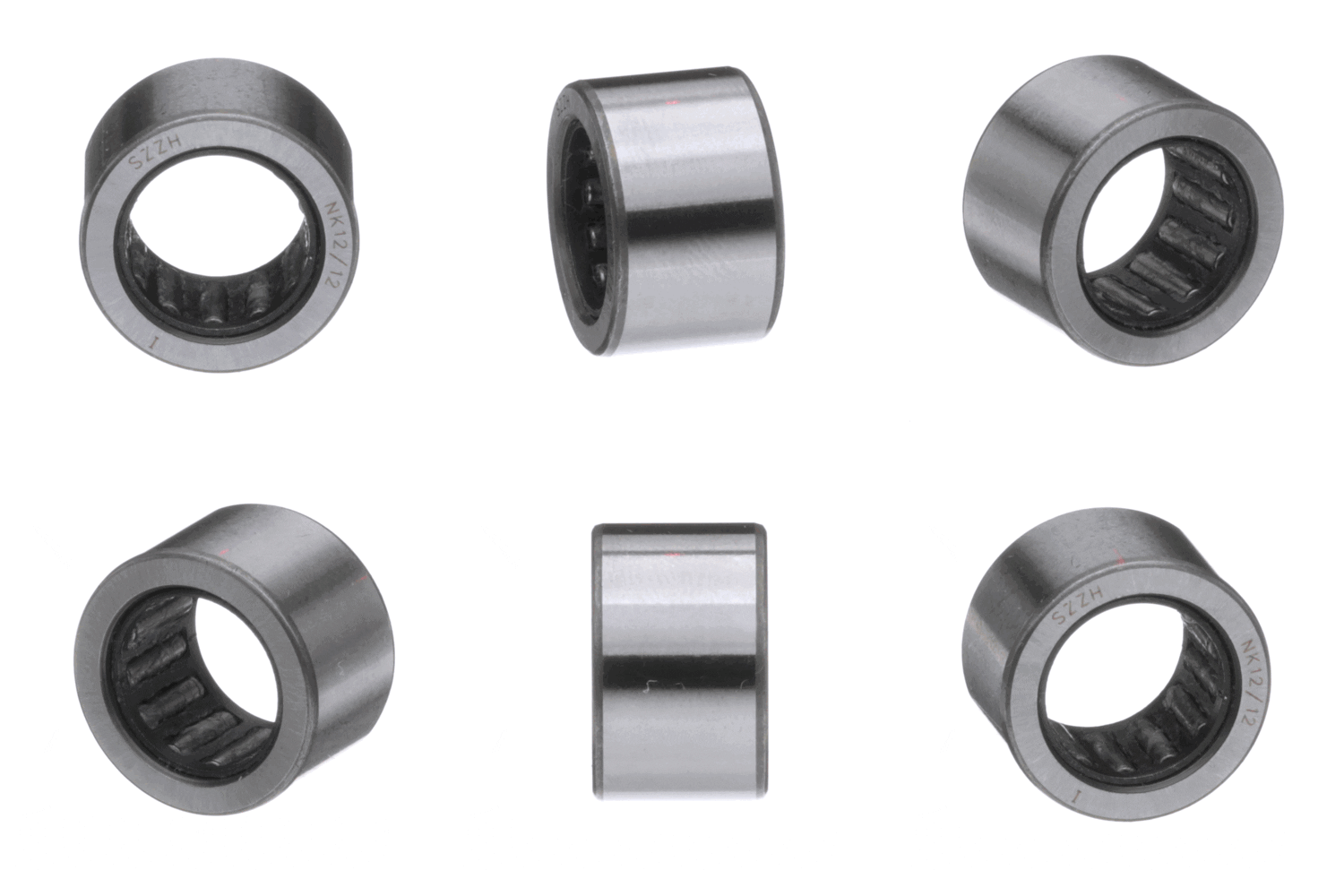
Bosch Part# 1610910081 Needle Roller Bearing - Genuine OEM
1610910081
$17.95 $23.34

In stock 4 Products

Quick View

In stock 4 Products

Part

Bosch

$17.95 $23.34
Quick View

Part

1616610091
$19.95 $25.94

In stock 4 Products

Quick View

In stock 4 Products

Part

Bosch

$19.95 $25.94
Quick View

Part

Bosch Part# 1615500418 Switch Cover - Genuine OEM
1615500418
$8.45 $24.59

In stock 4 Products

Quick View

In stock 4 Products

Part

Bosch

$8.45 $24.59
Quick View

Part

1614220131
$39.99

In stock 2 Products

Quick View

In stock 2 Products

Part

Bosch

$39.99
Quick View

Part

Bosch Part# 1610499022 Ratchet Sleeve - Genuine OEM
1610499022
$5.45 $7.09

In stock 0 Products

Quick View

In stock 0 Products

Part

Bosch

$5.45 $7.09
Quick View

Part

1617000727
$68.95

In stock 1 Products

Quick View

In stock 1 Products

Part

Bosch

$68.95
Quick View

Part

2910021126
$5.45 $18.14

In stock 2 Products

Quick View

In stock 2 Products

Part

Bosch

$5.45 $18.14
Quick View

Part

1610210191
$5.45 $12.45

In stock 4 Products

Quick View

In stock 4 Products

Part

Bosch

$5.45 $12.45
Quick View

Part

Bosch Part# 1610910092 Needle Roller Bearing - Genuine OEM
1610910092
$36.95 $48.04

In stock 3 Products

Quick View

In stock 3 Products

Part

Bosch

$36.95 $48.04
Quick View

Part

Bosch Part# 160202508J Auxilliary Handle - Genuine OEM
160202508J
$58.95

In stock 2 Products

Quick View

In stock 2 Products

Part

Bosch

$58.95
Quick View

Part

1614601073
$6.45 $8.39

In stock 2 Products

Quick View

In stock 2 Products

Part

Bosch

$6.45 $8.39
Quick View

Part

1600A01BG9
$412.45 $536.19

In stock 4 Products

Quick View

In stock 4 Products

Part

Bosch

$412.45 $536.19
Quick View

Part

1617000188
$13.45 $20.45

In stock 12 Products

Quick View

In stock 12 Products

Part

Bosch

$13.45 $20.45
Quick View

Part

16072335R3
$52.95 $68.84

In stock 4 Products

Quick View

In stock 4 Products

Part

Bosch

$52.95 $68.84
Quick View

Part

1610210008
$8.45 $10.99

In stock 3 Products

Quick View

In stock 3 Products

Part

Bosch

$8.45 $10.99
Quick View

Part

Bosch Part# 1610210195 Ring - Genuine OEM
1610210195
$17.95 $24.59

In stock 11 Products

Quick View

In stock 11 Products

Part

Bosch

$17.95 $24.59
Quick View

Part

Bosch Part# 1611015021 Sealing Plate - Genuine OEM
1611015021
$5.45 $7.09

In stock 13 Products

Quick View

In stock 13 Products

Part

Bosch

$5.45 $7.09
Quick View

Part

1613414009
$5.45 $12.45

In stock 2 Products

Quick View

In stock 2 Products

Part

Bosch

$5.45 $12.45
Quick View

Part

1613490029
$5.85 $24.59

In stock 0 Products

Quick View

In stock 0 Products

Part

Bosch

$5.85 $24.59
Quick View

Frequently Asked Questions

Quick answers for your replacement part needs

Where can I find genuine replacement parts for my appliance?

Finding genuine replacement parts for your appliances has never been easier! We offer authentic parts for over 250 brands, including LG, Samsung, Whirlpool, Kenmore, Bosch, and Liebherr. Simply enter your appliance's model number on our website, and explore our extensive selection of compatible parts designed to restore your appliance's peak performance and reliability.

What type of appliance parts and accessories are available for purchase?

Are your replacement parts compatible with all models?

What if I can’t find the appliance part I need?

How can I track my order for appliance parts online?

How long will it take to receive my replacement parts order?

Can I return appliance parts if they are not compatible with my model?

How can I update my shipping address after placing an order?

How can I get in touch with customer support?

Couldn’t find the answer to your question?

Your satisfaction matters. Let us know how we can assist with your repair journey.

Your Cart ( 0 items)

You currently have 0 items in your Cart

Return to shop
Menu

Compatible Models